

As part of the university’s comprehensive prevention efforts for students, UConn requires all incoming students to complete AlcoholEdu for College. AlcoholEdu is an online, evidence-based alcohol prevention program that empowers college students to make well-informed and safe decisions about alcohol.
Alcohol: Strategies to Reduce Your Risk
Utilize these strategies to avoid the not-so-good impacts alcohol can have sometimes.
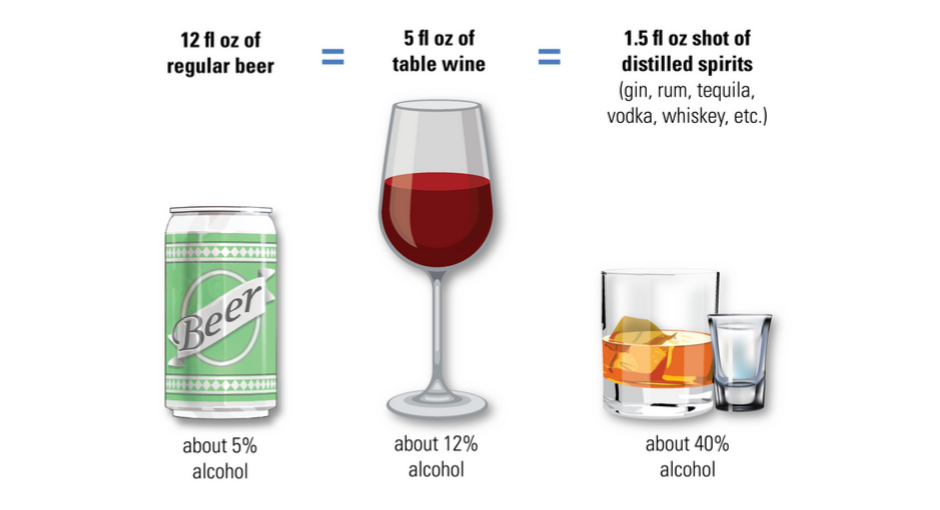
Utilize standard drink sizes—Pour standard drinks so each drink really is only one drink.
Set limits you think will work for you—Students who have 4 or more drinks (females) or 5 or more (males) in one sitting are at increased risk for alcohol-related harm. Aiming for below that number is a great place to start!
Eat before drinking—it’ll help slow the absorption of alcohol and keep you feeling your best.
Pace yourself—sip and savor to both reduce your risk and enjoy yourself more. For more on how to pace yourself, see our guide to pacing below.
Hydrate—drinking water before, during, and after drinking alcohol goes a long way. Alternating alcoholic beverages with water or other non-alcoholic drinks can be helpful.
Get home safely—Grab a ride from a fellow (sober) Husky offering, or take a walk home with friends to make sure you get to your final destination safely!
Guide to Pacing
Pacing or spacing out how much alcohol you’re consuming over a period of time is a great way to reduce your risk of experiencing alcohol-related harms.
Strategies for pacing yourself include:
- Alternating non-alcoholic and alcoholic drinks
- Eating a meal before drinking to slow the absorption of alcohol
- Trying to avoid drinking games and pre-gaming
To understand pacing on a deeper level, check out the following information about Standard Drinks, BAC, the Biphasic Effect, and When to Call for Help.
Standard Drinks
Knowing standard drink sizes is helpful if you’re trying to figure out how much alcohol is in your drink. Below is a guide that shows standard drink sizes for some common types of alcohol. Be aware, however, that some beverages may contain a higher percentage of alcohol than what’s shown. Some types of beer—IPAs, for example—are often much higher than 5% alcohol.
Source: NIAAA.gov
Blood Alcohol Concentration
Once you know how to pour a standard drink, you can estimate your BAC. BAC stands for Blood Alcohol Concentration and is the ratio of alcohol to blood in your body.
Biological sex, body weight, amount consumed, and drinking pace are the most significant influences on BAC. Utilizing a BAC calculator is a great way to get a sense of what your BAC might look like, while taking those variables into account. You can find one here. Please note that results from these calculators are estimations and should not be used to determine if you can safely drive.
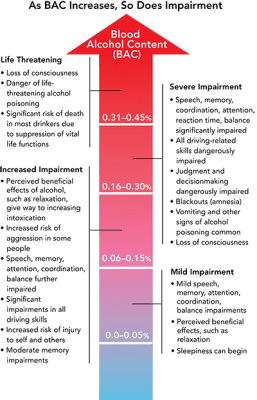
Included here is a general guide to what someone without a tolerance might experience at each BAC range.
Source: NIAAA.gov
Biphasic Effect
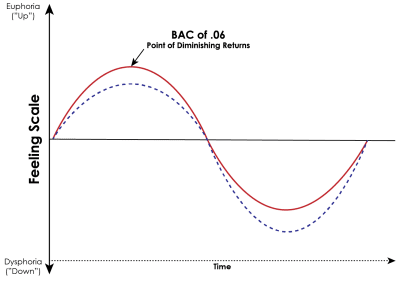
Utilize what you know about your BAC to consider a drink limit that’s right for you. A BAC of .06 is considered the point of diminishing returns– the BAC at which drinking more alcohol leads to fewer of the pleasurable effects associated with drinking. Keeping your BAC below .06 will reduce experiences you might want to avoid, such as blacking out, feeling nauseous, or doing things you’ll later regret.
When to Call for Help
Below are signs to look out for that indicate a fellow Husky needs medical attention. What’s most important though, is to recognize when your gut is telling you that something isn’t right. If you’re wondering if you should call for help, that’s the moment you know you have to.
Signs of Alcohol Poisoning:
- Confusion
- Difficulty remaining conscious , or inability to wake up
- Vomiting
- Seizures
- Slow or irregular breathing
- Slow heart rate
- Clammy skin
- Body temperature change
- Skin color changes (could be bluish or pale)
These signs indicate someone needs immediate medical attention—call 911. Remember, UConn’s #1 priority is the safety of our students, which is why we have a Good Samaritan Statement in place. You can read that statement here.
